





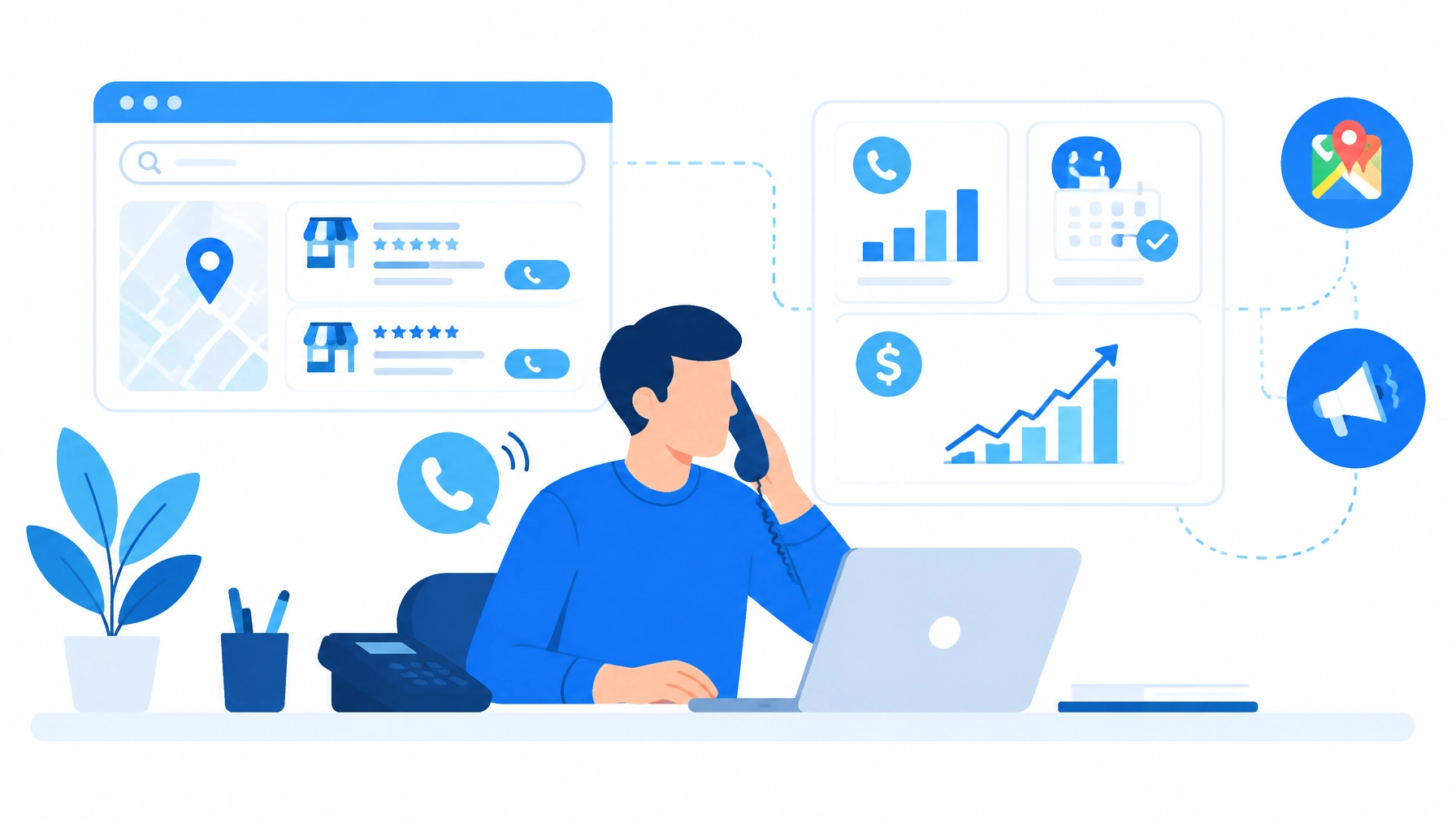
Google Local Service Ads can put high-intent prospects on your phone. But your ad budget does not create revenue until someone answers, qualifies, and books the caller.
For service businesses in Monmouth County and beyond, speed-to-lead is the conversion layer that determines whether paid visibility becomes a full appointment calendar or a collection of missed opportunities.
Google LSA captures people actively searching for immediate help. Meta Ads for service businesses expand your reach by generating both phone calls and lead forms. Together, they can create a powerful growth engine.
But only if your call handling works.
A missed call, unanswered voicemail, or five-minute hold can send a ready-to-buy customer to a competitor. Research from InsideSales found that conversion rates were more than 8 times higher when the first response occurred within five minutes compared with responses made later. Your goal should be faster than five minutes: answer immediately when possible, and return every missed call within one to two minutes.
Convert Every Google Local Service Ads Call Into a Booking
Google reports several types of LSA activity, including total phone calls and connected calls. A connected phone call generally means the conversation lasted more than 30 seconds, according to Google’s Local Services Ads reporting documentation.
That distinction matters. A call is not automatically a qualified lead. A qualified lead is not automatically a booked job.
Your team must move each conversation through a defined path:
Call received → answered → qualified → appointment booked → job completed → revenue collected
When a prospect calls, they are often comparing providers in real time. If your team sends the caller to voicemail, puts them on hold without an update, or promises a callback later, the opportunity becomes vulnerable.
Build your process around three operational rules:
- Answer every call during advertised hours.
- Route overflow calls to a trained backup or answering service.
- Return missed calls within two minutes whenever possible.
Google also notes that fast lead responses can support better LSA performance and responsiveness signals. Your response process affects both customer experience and campaign efficiency.
Build a Phone Protocol That Books on the First Call
A consistent script does not make your team sound robotic. It prevents important steps from being skipped when the phone is busy.

1. Open with a confident greeting
Use the business name and identify yourself:
“Thank you for calling [Business Name]. This is [Name]. How can we help you today?”
Avoid a vague “Hello?” or a rushed greeting. The first five seconds establish trust.
2. Ask the questions that determine fit
Keep qualification short and relevant. Ask:
- What service do you need?
- What is the service address or ZIP code?
- How urgent is the issue?
- When did the problem begin?
- Are you the property owner or decision-maker?
- Have you already received an estimate?
- What appointment timing works best?
These questions protect your schedule while helping the caller feel understood.
3. Book during the first conversation
Do not end with “Someone will call you back to schedule.” Offer specific options:
“We can send a technician Tuesday between 10:00 and 12:00, or Wednesday between 2:00 and 4:00. Which works better?”
Booking on the first call reduces follow-up friction. It also gives you a measurable conversion event.
4. Confirm the dispatch window
Repeat the details before ending the call:
- Customer name
- Service address
- Requested service
- Date and time window
- Preparation instructions
- Cancellation policy
- Best callback number
Then send a confirmation text if the customer has opted into SMS communication.
Eliminate avoidable call friction
Audit your phone experience every week. Look for:
- Calls reaching voicemail during business hours
- Long hold times
- Transfers between departments
- Inconsistent pricing explanations
- Staff failing to ask for the appointment
- Unclear service-area coverage
- Missed calls without follow-up tasks
A high-converting campaign cannot compensate for a broken phone process.
Track Cost Per Booked Call, Not Just Cost Per Lead
A cheap lead can be expensive if it never becomes an appointment.
Your reporting should distinguish between:
- Cost per lead: Ad spend divided by total calls or forms
- Cost per qualified lead: Ad spend divided by qualified opportunities
- Cost per booked call: Ad spend divided by booked appointments
- Cost per completed job: Ad spend divided by completed jobs
- Revenue per lead: Revenue divided by total leads
- Return on ad spend: Revenue divided by ad spend
Use this formula:
Cost per booked call = Total campaign spend ÷ Number of booked appointments
For example, if you spend $2,400 and generate 48 calls, your cost per call is $50. If 18 calls are qualified and 9 become appointments, your cost per booked job is $266.67.
That is the number you should compare with your average gross profit.
A 2026 Invoca benchmark for business services reports that 38% of calls answered by a person become leads, and 44% of those leads convert on the call. These figures are directional, not universal LSA benchmarks. Your own CRM data should remain the source of truth.
Record every meaningful outcome:
- New lead
- Unqualified
- Qualified
- Appointment booked
- Rescheduled
- No-show
- Job completed
- Lost
- Lost reason
- Revenue
Review Google’s LSA lead management guidance to keep platform records consistent with your internal reporting.
Use Meta Ads to Drive Calls and Capture Forms
Google LSA captures existing search demand. Meta Ads create and recover demand across Facebook and Instagram.
That gives Meta two important jobs.
Drive live calls with Meta campaigns
Use call-optimized campaigns when:
- The service is urgent
- Your staff is available during campaign hours
- The average job value supports live qualification
- Customers need reassurance before booking
- Your team can answer quickly
Call-focused creative should be direct:
“Need same-day HVAC service? Call now for available appointment windows.”
Track more than impressions and clicks. Measure calls placed, connected calls, qualified conversations, booked appointments, and completed jobs.
Meta’s lead-generation-with-calling options can support this approach.
Capture leads with Instant Forms
Meta Instant Forms work well for customers who are researching, comparing providers, or requesting an estimate. They also provide coverage when your phones are closed.
Ask only what your team needs to respond quickly:
- Name
- Verified phone number
- ZIP code
- Service needed
- Urgency
- Preferred contact time
- Project size, when relevant
Use higher-intent forms for expensive or appointment-based services. Add a review step and qualifying questions rather than optimizing only for submission volume.
A form is not a weaker channel by definition. It simply requires faster follow-up. A prospect who submits a roofing estimate request may still contact two competitors while waiting for your callback.
Recover Missed Calls and Unbooked Leads
Treat every missed call as a recoverable opportunity.

Use this missed-call sequence
Immediately: Send a compliant text message:
“Sorry we missed your call. This is [Business Name]. What service do you need, and what ZIP code are you in? You can reply here or call [number].”
Within two minutes: Create a callback task and call the prospect.
Within 10 minutes: Make a second attempt if there is no answer. Leave a concise voicemail with your name, business, callback number, and next available appointment window.
Later the same day: Send one more text or email with a booking link and two available time slots.
The next day: Make a final personal follow-up attempt. Do not continue indefinitely. Suppress anyone who books, opts out, or requests no further contact.
For Instant Form leads, send an immediate confirmation, call within five minutes, and prioritize high-value or urgent inquiries. Follow all applicable consent, privacy, and automated messaging requirements.
Retarget unbooked prospects
Use Meta retargeting audiences for people who:
- Opened but did not submit an Instant Form
- Visited a service page
- Watched a high percentage of a service video
- Clicked a call ad but did not connect
- Started but did not complete a booking
- Missed an appointment
Change the message based on the stage. A first-touch ad can educate. A retargeting ad should remove friction:
“Still need a plumbing estimate? Get two appointment windows today.”
Manage Google My Business and Local Visibility as One System
Google My Business management, now generally called Google Business Profile management, supports the trust layer around your paid campaigns.
Keep your profile accurate:
- Business hours
- Service areas
- Phone number
- Services
- Photos
- Reviews
- Holiday availability
- Booking links
Your custom SEO growth plan should connect local visibility, service pages, review signals, and conversion tracking. Your Google Ads management services can then reinforce the paid search and call strategy.
This is what effective local business marketing looks like: visibility, response speed, qualification, and revenue measurement working together.
Review This Weekly Scorecard
Build a simple scorecard for LSA, Meta calls, Meta forms, organic search, and Google Business Profile activity.
| Metric | Weekly question |
|---|---|
| Calls received | How much demand did each channel create? |
| Answer rate | How many calls reached a person? |
| Callback speed | How quickly did missed calls receive a response? |
| Qualified rate | Did the lead fit your service, location, and budget? |
| Booking rate | How many qualified opportunities became appointments? |
| No-show rate | Are confirmation and reminder processes working? |
| Cost per booked job | What did scheduled work actually cost? |
| Completed-job rate | How many bookings became revenue? |
| Average job value | Which channel produces the best customers? |
| Lost-job reason | What should your team or campaigns change? |
Set initial operating targets of 95% or better answer rate during staffed hours, callback attempts within five minutes, and same-day disposition for every lead.
Then make one decision from the scorecard each week: adjust staffing, improve the script, change targeting, update the offer, or shift budget toward the channel producing profitable bookings.
Partner With a Local SEO Agency That Measures Revenue
You do not need more disconnected marketing activity. You need a revenue-generating machine.
SEOPulseAI combines local SEO, Google LSA strategy, Meta Ads, lead generation services, call tracking, landing page optimization, and reporting. Our broader track record includes $25M+ in client revenue generated, 185% average traffic growth, and a 97% client retention rate.
One client result illustrates the value of an integrated approach:
“Their data-driven approach to our Google and Facebook Ads transformed our advertising from a cost center into our most profitable channel. They achieved a 4.8x ROAS, slashed our cost-per-lead by 45%, and tripled our qualified leads.”
Jessica Miller, Marketing Director
Results vary by market, service, budget, and operations. The measurement framework remains consistent.
Ready to stop losing high-intent calls? Partner with SEOPulseAI for a free, no-obligation review of your Google LSA spend, Meta campaigns, phone protocol, missed-lead follow-up, and cost per booked job. We will show you where your conversion layer is breaking, and how to build a faster path from first ring to booked revenue.